- Call us Via Whatsapp: +84 (0) 832 126 699
4.9 stars on our site
(15,000 reviews)
- Monday - Sunday : 08:00 - 17:00
(15,000 reviews)

The wind has a voice when you travel on a bicycle. In the far north of Vietnam, it whispers of cold limestone and mountain mist; along the central coast, it roars with the scent of saltwater and warm pine; in the deep south, it carries the thick, sweet moisture of tropical rivers. To ride across this spectacular land under your own power is to participate in an epic sensory drama. However, because this narrow country spans thousands of miles and multiple climate zones, your experience is entirely shaped by the weather. Timing your journey is not just a matter of comfort—it is the difference between a golden adventure and a rain-soaked struggle. This guide is your definitive blueprint to discovering the Best Season for Vietnam Cross-Country Cycling: Recommended Tour Packages.
.avif)
Whether you are looking to challenge your physical limits on high-end road machines or want a seamless, supported journey designed by Golden Cycling Tours that fits your personal schedule, understanding the complex rhythm of Vietnam’s seasons will ensure you ride under perfect skies.
Imagine the transition: you start your day in the early morning shadow of a high-altitude mountain pass, your breath forming soft white clouds in the cool, damp alpine air. The rich, clean scent of dew-covered pine needles fills your lungs, and your thigh muscles burn with a deep, comforting warmth as you turn the pedals against a steep, rocky gradient. Your carbon-fiber wheels hum softly on the damp tarmac, and the mechanical, metallic click-click-click of your high-end derailleur echoes off the towering rock walls.
Within a few days, that cool highland air softens into the warm, tropical breeze of a coastal plain. The sharp scent of alpine pines is replaced by the sweet, rich aroma of woodsmoke from valley hamlets and the salty, clean tang of the open ocean. Your tires sing a different tune now, rolling effortlessly over smooth, sun-baked coastal asphalt.
This is the beauty of a cross-country ride across Vietnam. The geography shifts continuously, and as a cyclist, you are completely open to these transformations.
To help you plan your journey under the most ideal conditions, this guide decodes the weather patterns of the country, illustrating how to choose the Best Season for Vietnam Cross-Country Cycling: Recommended Tour Packages.
To plan a long-distance cycling tour across Vietnam, you must understand that the country does not have a single, uniform climate. Instead, it is divided into three distinct meteorological zones, each marching to its own seasonal rhythm.
The mountainous north experiences a true four-season climate. In the winter months from December to February, cold air blowing from Siberia drops temperatures in the mountains, sometimes bringing frosty mornings and heavy, mysterious mists.
The spring from March to April is a time of renewal, marked by pleasant warmth and beautiful blossoms.
The summer from May to August brings intense heat and heavy monsoon rains, which can make mountain roads slick and challenging.
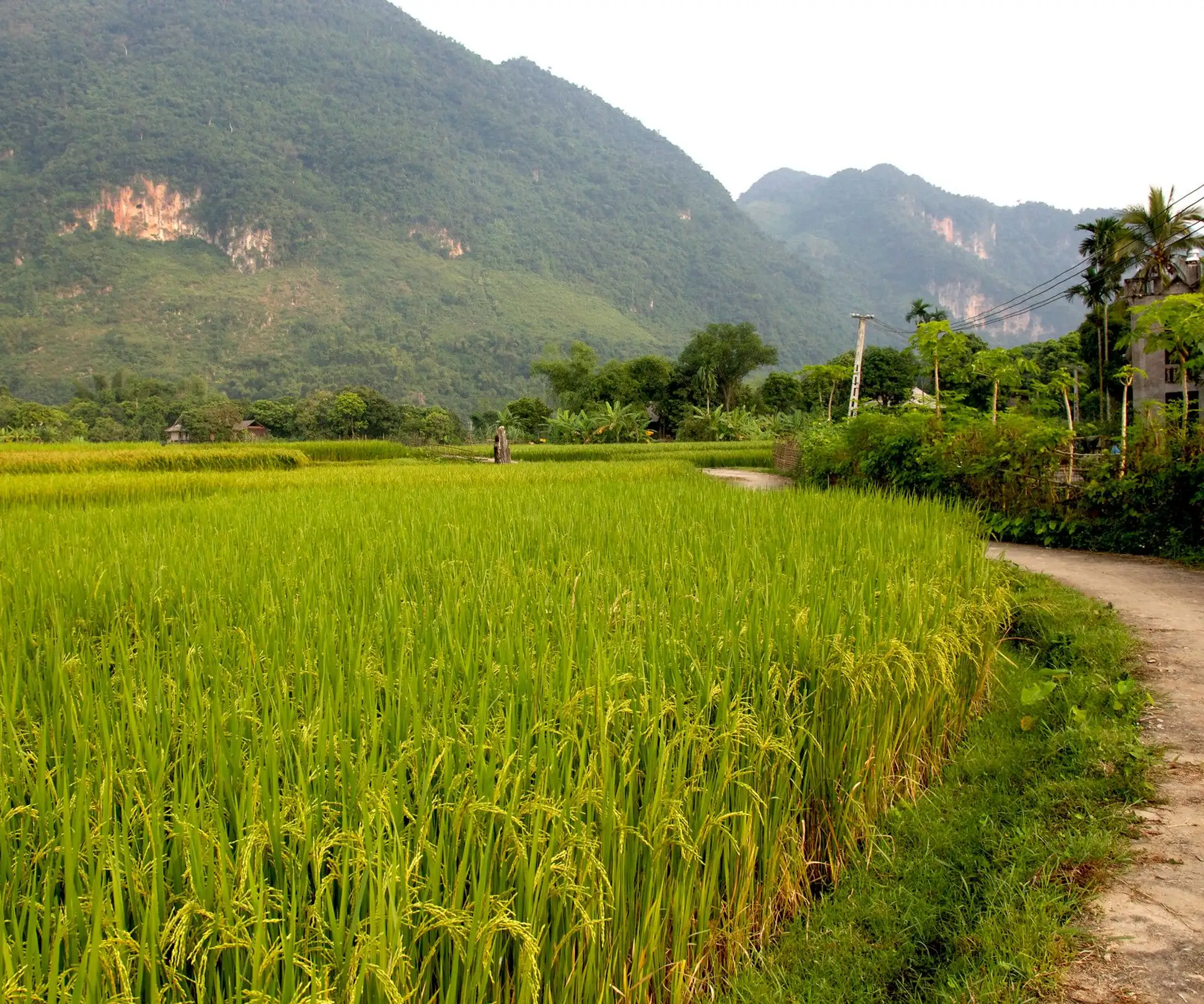
Autumn from September to November is widely considered the crown jewel of northern seasons, offering cool, dry air, clear blue skies, and golden terraced rice fields ready for harvest.
The central region is defined by the mighty Truong Son Mountain Range, which acts as a giant weather barrier. When the wet monsoon hits the south, the central coast often remains sunny and dry.
Conversely, from September to December, the central coast experiences its heavy rainy season, characterized by strong sea winds and occasional tropical storms.
The dry season here runs from January to August, with the early months from February to April offering the most comfortable, temperate riding conditions before the intense heat of mid-summer arrives.
The south has a simple, tropical climate divided into two distinct seasons: wet and dry. The dry season runs from November to April, offering warm, sunny days with very little rainfall.
The wet season spans from May to October, bringing short, heavy afternoon downpours that cool the air but can turn rural paths into muddy challenges.
Throughout the year, the temperature in the south remains consistently warm and tropical.
If you are planning to cycle the entire length of the country, your primary goal is to find a window of time where all three regions offer pleasant riding conditions. There are two primary "Golden Windows" that offer the perfect climate balance for long-distance touring.
This is a spectacular time to ride. By starting in the north in October, you experience the cool, dry autumn weather and catch the final, golden days of the rice harvest in the mountains.
As you head south into November, the central region transitions out of its heaviest rains, and you enter the southern plains just as the dry, sunny winter season begins.
This window offers cool highland climbs, manageable coastal winds, and pleasant, dry tropical riding in the south.
This is another exceptional window for cross-country riding. Starting your journey in the south in January or February allows you to enjoy the dry, warm tropical weather of the delta before the heat becomes too intense.
As you cycle north into the central region during March, you will enjoy sunny, dry days and pleasant coastal breezes.
Arriving in the northern mountains in April, you will experience the mild, pleasant warmth of spring, with clear skies and beautiful wild blossoms covering the hillsides.
To explore how these perfect seasonal windows align with highly curated itineraries, explore all available packages designed to deliver the ultimate riding experience.
For those who do not have the time to complete a full cross-country traverse, focusing on a specific region during its absolute prime season is a highly rewarding way to experience Vietnam.
The rugged north is a paradise for adventurous cyclists, featuring towering limestone karsts, deep river valleys, and spectacular mountain roads. To experience this region at its absolute best, plan your trip during the dry, cool months of autumn (September to November) or spring (March to May).
Your journey starts in the historic, energetic city of Hanoi. Taking part in Hanoi Bike Tours offers a thrilling start to your expedition. You weave through the historic lanes of the Old Quarter, where the air is sweet with roasted coffee beans and steaming bowls of Pho, before crossing the historic Long Bien Bridge and heading into the quiet, flat paths of the Red River Delta.
Heading west, you enter the beautiful province of Hoa Binh to experience the peaceful valley roads of Mai Chau Bike Tours. Here, you glide past traditional stilt houses of the White Thai ethnic group, surrounded by green fields of young rice, breathing in the clean, refreshing scent of wet bamboo forests.
Continuing your journey through Vietnam Northwest Bike Tours, the roads lead you deeper into the mountains of Lao Cai province. Here, you participate in Sapa Bike Tours, tackling the legendary O Quy Ho Pass. As you pedal through the cool, damp mist, your muscles work hard against the steady incline, with the peak of Fansipan towering above you in the clouds. Reaching the summit, you enjoy a fast, thrilling descent into the town of Sapa, where the scent of roasting mountain corn and woodsmoke fills the chilly air.
For the ultimate mountain challenge, explore the northeast with Ha Giang Bike Tours. Cycling along the spectacular Ma Pi Leng Pass, you hover on a narrow road carved into vertical limestone cliffs, looking down thousands of feet at the thin green ribbon of the Nho Que River flowing through a deep canyon. The air here is thin, cool, and quiet, broken only by the sound of your tires gripping the asphalt.
Your journey through Cycling Northern Vietnam continues into Cao Bang province. Enjoying Cao Bang Bike Tours leads you through dense pine forests to the spectacular Ban Gioc Waterfall, where the thunderous roar of the waterfall can be heard from miles away, and a cool, clean spray coats your skin, offering a welcome refresh after days of hard climbing.
You then head south through the quiet countryside of Lang Son and Bac Giang provinces, watching the dramatic limestone karsts slowly soften into the fertile plains of Ninh Binh province. Riding with Ninh Binh Bike Tours, you explore the quiet, flat paths of the Trang An Scenic Landscape Complex, pedaling easily between towering limestone formations that rise from quiet green waterways.
The central region offers a beautiful balance of dramatic mountain passes and scenic coastal roads. The ideal season to cycle here is from February to August, when the weather is dry and sunny, and the sea breezes are pleasant.
To avoid the busy coastal highways, head inland to the peaceful forests of Thanh Hoa province, experiencing the beautiful Pu Luong Bike Tours route. In the Pu Luong Nature Reserve, you navigate winding forest roads shaded by thick jungle canopy, smelling the rich, damp earth of the tropical forest and listening to the loud calls of cicadas.
From here, join the historic mountain roads via Ho Chi Minh Trail Cycling Tours, passing through the provinces of Nghe An, Ha Tinh, and Quang Binh. This route is a paradise for cyclists, featuring smooth, high-quality asphalt and very few vehicles. In Quang Binh, you ride past the massive cave entrances of the Phong Nha-Ke Bang National Park, where ancient rivers have carved giant caverns into the limestone mountains.
Heading east towards the sea, you enter Quang Tri and Thua Thien Hue provinces. In Hue, you enjoy Hue Bike Tours, riding quiet, shaded paths along the Perfume River and exploring the peaceful gardens of the Imperial Citadel.
South of Hue, you face one of the highlights of Cycling Central Vietnam: the legendary Hai Van Pass. This historic road climbs steadily from the sea into the coastal clouds. As you pedal upwards, your legs burn with a steady ache, but the view of the blue ocean and the white sands of Lang Co Bay far below gives you fresh energy. Reaching the old stone gate at the summit, you enjoy a fast, sweeping descent into the modern city of Da Nang.
Your route then leads into Quang Nam province, where you join Hoi An Bike Tours. You ride quiet sand paths through the coastal countryside, passing organic vegetable farms and coconut groves, before arriving in the beautiful town of Hoi An. At night, the historic yellow buildings are illuminated by the warm, soft light of thousands of silk lanterns reflecting in the calm waters of the Thu Bon River.
From Hoi An, your route heads south through Quang Ngai, Binh Dinh, and Phu Yen provinces, riding along quiet coastal roads bordered by dry sand dunes and beautiful blue bays, passing active salt pans, quiet fishing villages, and dramatic rocky capes like Dai Lanh in Khanh Hoa province.
The south is a land of endless sun, coconut groves, and fertile waterways. The absolute best time to ride here is during the dry winter months from November to March, when the temperatures are warm but the humidity is comfortable, and there is virtually no rain.
You ride through the dry, desert-like landscapes of Ninh Thuan and Binh Thuan provinces, filled with vineyards and dragonfruit farms, before heading inland through Dong Nai and Binh Duong provinces to the busy, exciting streets of Ho Chi Minh City. Navigating the city on a bicycle is an exciting experience, passing historic landmarks like the Saigon Notre-Dame Basilica and the Independence Palace.
Leaving the city behind, you cross into Long An and Tien Giang provinces, entering the fertile world of the Mekong River. This is the start of your journey through Cycling Southern Vietnam, a flat and peaceful landscape shaped by water.
Your route through Mekong Delta Bike Tours leads you through Ben Tre, Vinh Long, and Can Tho provinces. Here, you ride along narrow concrete paths built along the banks of quiet canals, shaded by thick arches of water palms and heavy fruit trees. The air is warm and humid, sweet with the scent of ripe bananas, durian, and fresh coconut water.
You cross small, arched concrete bridges, looking down at local wooden boats laden with fresh produce, and enjoy the friendly, enthusiastic greetings of local children playing by the water, offering a peaceful, meditative conclusion to your journey.
If you are committing to a full cross-country ride, deciding which direction to travel is an important choice that is highly influenced by the seasonal wind patterns.
Opting for a route of Cycling North to South Vietnam is highly recommended during the winter months (October to February). During this time, the strong northeast monsoon winds blow from the north, giving you a consistent, helpful tailwind as you cycle down the central coast.
This direction starts you in the cool, dramatic northern mountains, letting you build your physical strength before reaching the warmer, flatter coastal plains and the tropical south.
Choosing a route of Cycling South to North Vietnam is ideal during the spring months (March to May). During this window, the southern and central regions are dry and sunny, and the winds are light.
This direction begins your journey on the gentle, flat paths of the delta, allowing you to find your physical rhythm and build your endurance before facing the challenging, towering passes of the far north under clear spring skies.
An epic multi-week journey requires careful logistical planning to ensure you remain strong, healthy, and comfortable on the road.
Vietnam’s culinary culture is a paradise for cyclists, offering fresh, nutritious, and incredibly flavorful food in every village that will keep your energy levels high.
Breakfast: Start your morning with a hot, fragrant bowl of Pho at a local roadside stall. The rich, clear broth, spiced with star anise and ginger, warms your body, while the fresh rice noodles and tender beef provide high-quality carbs for your morning ride.
Lunch: Look for local eateries displaying signs reading "Com Binh Dan" (commoner's rice). These local eateries offer a plate of hot rice topped with a variety of delicious, fresh dishes: caramelized pork belly, ginger chicken, tofu in tomato sauce, and stir-fried morning glory with garlic. It is healthy, delicious, and cheap.
Snacks: Stop at local village stands for fresh fruit like bananas, sweet mangoes, and dragonfruit. Drink fresh sugarcane juice (nuoc mia) squeezed over ice with fresh calamansi lime for an instant, natural sugar boost.
Coffee: In the afternoons, treat yourself to a glass of strong, sweet Vietnamese iced coffee with condensed milk (ca phe sua da) to help you power through the final miles of your ride.
Quality rest is essential for your body to recover after hours of physical effort, and Vietnam offers excellent options for every style of travel.
Local Guest Houses (Nha Nghi): Found in even the smallest, most remote towns. They are simple, clean, exceptionally budget-friendly, and always offer a safe, secure place to store your bicycle overnight.
Ethnic Homestays: Located in the mountain valleys of the north, such as Mai Chau or Sapa. You sleep in traditional wooden stilt houses of local ethnic families, enjoy home-cooked family feasts, and learn about local customs.
Boutique Hotels & Luxury Resorts: Perfect for rest days. In major destinations like Hanoi, Ninh Binh, Hue, Hoi An, and Saigon, you can find highly affordable boutique properties featuring relaxing pools and wellness spas to soothe your tired muscles. If you prefer to mix high-end riding with premium accommodation, Vietnam Luxury Bike Tours offers a beautiful balance of comfort and adventure.
Navigating a cross-country route of this scale requires careful planning to ensure safety and enjoyment.
Self-Supported Riding: If riding independently, you must carry all your gear in panniers and rely on local train services along the coast to skip busy or unappealing highway sections.
Professional Support Vehicles: The safest and most comfortable option is to join an organized expedition with Golden Cycling Tours. A private, air-conditioned van travels behind your group, carrying all your heavy luggage, spare parts, fresh water, and snacks, allowing you to ride with light bikes and offering a comfortable seat if you get tired or face bad weather.
Electric Assistance: For those who want to glide through tough mountain stages using electric assistance, Vietnam E-Bikes Tours offers a fantastic way to tackle the steep climbs of the far north without extreme exhaustion.
The true beauty of a long-distance cycling tour is that it makes you approachable. You are not sealed away inside a bus; you are part of the landscape, making it easy to connect with the exceptionally warm and welcoming local people.
Across twenty-five provinces, you will meet diverse ethnic communities, including the Hmong, Tay, Nung, Thai, and Cham people, each with their own unique language, beautiful traditional dress, and rich customs. Take the time to stop, smile, and learn a few basic phrases. A simple "Xin Chao" (Hello) and "Cam On" (Thank you) will open doors and create beautiful, lasting memories of your journey.
Make sure your itinerary includes stops at these iconic cultural and natural landmarks:
The Old Quarter of Hanoi: A bustling, historic neighborhood rich with street food culture.
The Trang An Scenic Landscape Complex in Ninh Binh: A spectacular UNESCO site featuring winding river cave tours.
The Dong Van Karst Plateau in Ha Giang: A dramatic region of grey limestone peaks and unique mountain culture.
Ban Gioc Waterfall in Cao Bang: A majestic, multi-tiered waterfall bordering China.
The Imperial Citadel of Hue: The historic capital of the Nguyen Dynasty, filled with beautiful palaces.
Hoi An Ancient Town: A beautifully preserved historical port town illuminated by colorful lanterns.
The Mekong Delta Floating Markets: Vibrant water markets where merchants trade fresh goods from wooden boats.
Read about the experiences of fellow riders who have completed this epic route:
"Choosing the autumn package with Golden Cycling Tours was the best travel decision we have ever made. Riding through the northern mountains in October was incredible—the weather was cool, and the golden rice terraces in Sapa were absolutely breathtaking. The support team made us feel safe and comfortable every step of the way." – David & Linda M., United States
"I was unsure if I had the physical strength to cycle across so many provinces, so I chose a spring package riding a premium e-bike. It was the perfect choice. I could easily conquer the steepest climbs of the Ma Pi Leng Pass while fully enjoying the spectacular scenery. The logistics, the bikes, and the guides were outstanding." – Julian S., Germany
This is a long-distance expedition that covers varied terrain. While you should build your physical endurance with consistent training before the trip, our support vehicles allow you to adjust your daily mileage to match your comfort level. For those who want a less demanding ride, our premium e-bikes are a fantastic option.
A high-quality gravel bike or a dedicated touring bicycle with wide, durable tires (35mm or wider) is ideal. This setup provides the speed and efficiency needed for smooth paved highways while offering the stability and comfort required for rougher backroads, gravel paths, and mountain descents.
Yes, cycling across Vietnam is generally very safe. Violent crime is rare, and the local people are exceptionally friendly and helpful. The main safety concern is traffic on major highways. By choosing quiet backroads, wearing highly visible clothing, and riding with a professional support team, you can ensure a safe and enjoyable journey.
We recommend bringing high-quality cycling shorts, your preferred riding shoes, a comfortable helmet, light rain gear, polarized sunglasses, and quality sunscreen. Your heavy luggage is carried in our support vehicles, so you only need to ride with your personal essentials.
The ideal window is from October to April. During these months, the northern region is cool and dry, the central coast experiences moderate temperatures, and the southern delta is dry and warm, allowing you to avoid the intense heat and heavy rains of the summer monsoon season.
To travel across twenty-five provinces on a bicycle is to write an epic love letter to the land, the people, and your own physical capabilities. It is a journey of burning muscles, spectacular views, cool mountain mists, and warm sea breezes.
The road is open, and your bicycle is ready. Choose your perfect season, explore all available packages today, and let the adventure begin.




Leave a Reply
Your email address will not be published. Required fields are marked *