- Call us Via Whatsapp: +84 (0) 832 126 699
4.9 stars on our site
(15,000 reviews)
- Monday - Sunday : 08:00 - 17:00
(15,000 reviews)

Northern Vietnam is not merely a geographic location; it is a tapestry woven from the threads of history, geology, and humanity. It is a place where limestone peaks scrape the clouds, where rivers carve ancient paths through the jungle, and where dozens of distinct ethnic minority groups maintain traditions that date back millennia.
For the modern traveler, the challenge is not just to see this landscape, but to understand it. How do you move beyond the window of a tour bus and truly connect with the soul of the region?
The answer lies in the saddle of a bicycle. A cultural cycling tour in Northern Vietnam offers a unique vantage point. It slows down the pace of travel to the rhythm of a pedal stroke, allowing for serendipitous encounters, immersive experiences, and a profound connection with the land and its people.
In this comprehensive guide, brought to you by the experts at Golden Cycling Tours, we will embark on a journey through the mountains and valleys of the North. We will explore why cycling is the ultimate vehicle for cultural discovery, highlight the key ethnic regions you must visit, and provide the practical knowledge needed to plan an expedition that will change the way you see the world.
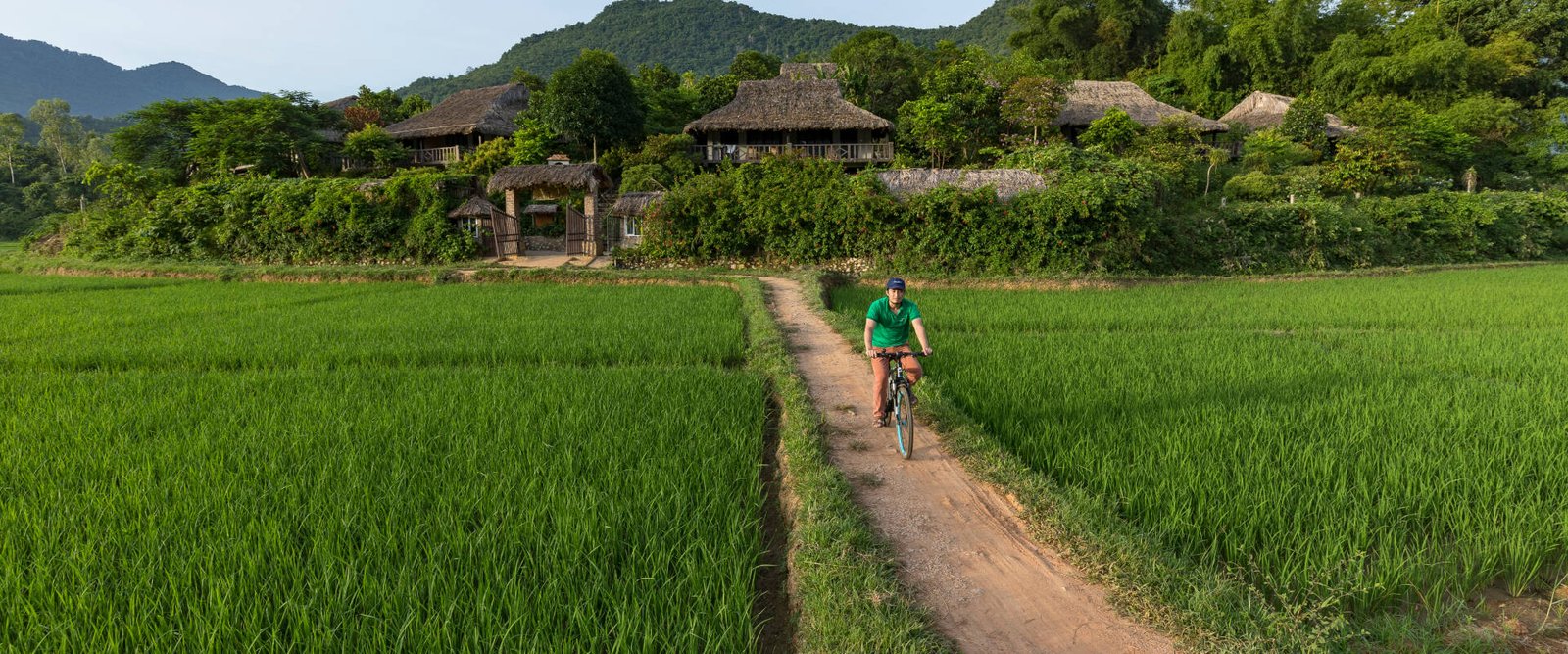
In a world obsessed with speed, the bicycle demands patience. But in return, it offers intimacy. When you are on a cultural cycling tour in Northern Vietnam, the barriers dissolve. There is no glass window separating you from the environment. You smell the woodsmoke from the kitchen fires; you hear the rhythmic clack of the weaving looms; you feel the humidity of the rice paddies.
A cyclist is approachable. In the remote villages of the North, a traveler on a bike is greeted not as a tourist to be exploited, but as a guest to be welcomed. Children run out to high-five you. Farmers pause their work to wave. This openness paves the way for genuine interactions that are simply impossible when traveling by car.
The culture of Northern Vietnam does not live on the highway. It lives down the narrow dirt tracks, across the bamboo bridges, and high up on the mountain ridges where cars cannot go. A mountain bike gives you access to the "hidden veins" of the region—the ancient footpaths that connect village to village. It is here, far from the tourist crowds, that authentic culture thrives.
To cycle through Northern Vietnam is to ride through a living ethnology museum. The region is home to over 30 different ethnic groups, each with its own language, dress, architecture, and customs.
In regions like Ha Giang and Sapa, you will encounter the Hmong (Black, White, Flower). Known for their resilience and independence, they inhabit the highest altitudes.
The Experience: Cycling through a Hmong village often involves navigating rocky terrain and witnessing the cultivation of corn and hemp on steep slopes. You might see men forging knives in open-air smithies or women creating intricate batik fabrics using beeswax and indigo.
Often identifiable by their red headdresses (Red Dao) or shaved eyebrows and blackened teeth (Black Dao), the Dao people are famous for their herbal medicine.
The Experience: After a long day of cycling, nothing beats a traditional Red Dao herbal bath. Soaking in a wooden barrel filled with a hot, dark brew of forest herbs is a cultural ritual that soothes tired muscles like magic.
In lower altitudes like Mai Chau and Ba Be, you find the Thai (White and Black) and Tay people. They are masters of wet rice cultivation and live in elegant wooden stilt houses.
The Experience: These regions offer flatter, more relaxing cycling. The culture here revolves around the rice cycle and communal living. Staying in a stilt house homestay is a highlight of any trip.
Northern Vietnam is vast. To maximize your cultural immersion, you need to target specific regions. Here are the pillars of a great cultural cycling tour in Northern Vietnam.
Located just southwest of Hanoi, Mai Chau is the perfect introduction to ethnic culture.
The Culture: Home to the White Thai.
The Ride: Flat, paved paths through emerald rice fields. It is accessible and serene.
The Highlight: Watching a traditional dance performance in the evening while sipping Ruou Can (rice wine) with the locals.
Start your journey here: Mai Chau Bike Tours
Connecting to Mai Chau is the Pu Luong Nature Reserve. Here, the landscape becomes wilder, and the culture shifts to the Muong and Thai people.
The Culture: Traditional farming techniques, including the iconic bamboo water wheels that lift water from the river to the fields.
The Ride: A mix of valley cruising and challenging climbs over mountain ridges.
The Highlight: Cycling through villages that have no electricity or modern roads, feeling like you have traveled back in time.
Explore the reserve: Pu Luong Bike Tours
For the hardcore adventurer, this is the holy grail. It traverses the most remote provinces bordering China.
The Culture: A intense mix of Hmong, Dao, Lo Lo, and Giay people. The Sunday markets (like Meo Vac or Dong Van) are riots of color and commerce, where livestock and goods are traded just as they have been for centuries.
The Ride: Demanding climbs (including the famous Ma Pi Leng Pass) and thrilling descents.
The Highlight: Staying in the fortified earthen houses of the Hmong people and witnessing the stark beauty of the Karst Plateau Geopark.
Plan the ultimate expedition: Cycling Northern Vietnam
A hotel separates you from the culture; a homestay immerses you in it. At Golden Cycling Tours, we prioritize accommodation that connects you with the host community.
In Mai Chau and Pu Luong, you will sleep in traditional stilt houses. You sleep on mattresses on the bamboo floor (with modern mosquito nets and clean linens), often under the same roof as the host family. This proximity allows you to observe their daily routines—how they cook, how they pray, and how they interact.
The heart of the homestay experience is the dinner. It is always a feast of farm-to-table dishes: spring rolls, grilled pork, bamboo shoots, and sticky rice. Dining family-style with your hosts, often communicating through smiles and gestures (or your guide's translation), is often the most memorable part of the day.
You cannot understand a culture without tasting it. Cycling burns calories, giving you the perfect excuse to indulge in the local cuisine. A cultural cycling tour in Northern Vietnam is essentially a rolling buffet.
Pho and Bun Cha: The classics, usually enjoyed for breakfast in small roadside stalls to fuel the day's ride.
Thang Co: A traditional Hmong stew made from horse meat and organs. For the brave adventurous eater!
Five-Color Sticky Rice: A specialty of the Tay people, dyed using natural leaves and flowers.
Corn Wine: The spirit of the high mountains. A toast of corn wine is the standard greeting in many Hmong villages.
The timing of your tour dictates the cultural landscape you will see.
Spring (Feb-April): The season of festivals. After the Lunar New Year, villages erupt in celebration with traditional games, music, and dancing. The peach and plum blossoms are in bloom.
Summer (May-August): The growing season. The rice terraces are vivid green. You witness the labor of planting and tending the crops.
Autumn (Sept-October): The harvest season. The most visually stunning time, as the rice turns gold. It is a time of plenty and joy in the villages.
Winter (Nov-Jan): The misty season. The mountains are moody and atmospheric. It is a good time to experience the warmth of the hearth in a local home.
Executing a seamless cultural cycling tour in Northern Vietnam requires deep local knowledge and logistical expertise. Here is why discerning travelers choose us.
Our guides are not just route-finders; they are storytellers. Many come from the very villages we visit. They bridge the language gap, unlocking the stories behind the smiles. They can explain the intricate symbolism in a piece of embroidery or the history behind a village shrine.
We believe in "Leave No Trace" not just environmentally, but culturally. We teach our guests the etiquette of the tribes—how to dress, how to greet, and when to ask for permission for photos. We ensure our presence supports the local economy without eroding the traditions.
Northern Vietnam is mountainous. We provide high-quality mountain bikes (Trek, Giant) with hydraulic brakes and suspension, ensuring you can navigate the rough village paths with confidence and safety.
We respect your commitment to travel. Our Guaranteed Tours policy means that once you book, your cultural adventure is confirmed. We do not cancel due to low group numbers.
To respect the culture and enjoy the ride, pack smart:
Modest Clothing: While lycra is fine on the bike, bring a sarong or light trousers to cover your knees when visiting temples or relaxing in a homestay.
Slip-on Shoes: You will be taking your shoes off constantly when entering homes.
Open Mind: Things in the mountains run on "village time." Be patient and embrace the unexpected.
Camera: But remember to put it down sometimes and just look.
Q: Is it difficult to communicate with the locals? A: English is rarely spoken in remote villages. However, a smile is universal. Your guide will act as your translator for deeper conversations.
Q: Are the homestays comfortable? A: Yes. While traditional, our partner homestays are clean and equipped with western-style toilets, hot showers, and comfortable bedding. It is a balance of authenticity and comfort.
Q: Can I do this as a solo traveler? A: Absolutely. Joining a small group tour is a fantastic way to meet people. The shared experience of cycling and culture creates instant bonds.
Q: Is the food safe to eat? A: Yes. The food in the homestays is cooked fresh daily using local ingredients. We also cater to dietary requirements (vegetarian, vegan, gluten-free).
"I came for the cycling, but I stayed for the culture. Riding through the Hmong villages in Ha Giang was like entering another world. Our guide, Tuan, was amazing—he introduced us to a family who invited us in for tea. It was the highlight of my life." – Robert, Canada
"The Mai Chau to Pu Luong trip was perfect. The transition from the flat valley to the jungle hills was stunning. Sleeping in the stilt house and waking up to the sound of roosters was so peaceful. Golden Cycling Tours took care of everything." – Elena & Marco, Italy
"I was worried about the fitness level, but the support van was always there. I could ride the fun parts and skip the big hills. The food at the homestays was better than any restaurant in Hanoi!" – Sarah, Australia
A cultural cycling tour in Northern Vietnam is more than a vacation. It is an education. It is a physical and spiritual journey that challenges you, rewards you, and ultimately changes you.
It is an invitation to leave the observer's seat and become a participant. To pedal not just through a landscape, but through a living history.
The mountains are calling. The tea is brewing. The bike is ready.
Start your cultural expedition today:
The Cultural Gateway: Mai Chau Bike Tours
The Jungle Immersion: Pu Luong Bike Tours
The Epic Northern Loop: Cycling Northern Vietnam
Book with Certainty: Guaranteed Tours
Golden Cycling Tours – Connecting Cultures, One Mile at a Time.

.jpg "Thai Binh Vietnam Bicycle")
.jpg "Phu Tho Vietnam Cycling")
.jpg "Thai Nguyen Cycling Vietnam")
.jpg "Tuyen Quang Cycling Vietnam")
.jpg "Vinh Phuc Cycling Vietnam")
Leave a Reply
Your email address will not be published. Required fields are marked *