- Call us Via Whatsapp: +84 (0) 832 126 699
4.9 stars on our site
(15,000 reviews)
- Monday - Sunday : 08:00 - 17:00
(15,000 reviews)

Vietnam is a country best viewed not through the window of a bus, but over the handlebars of a bicycle. Among the myriad of routes that crisscross this S-shaped nation, one stands out as the holy grail for adventure cyclists: The Ho Chi Minh Trail.
While the original trail was a clandestine supply network during the war, today, the paved Ho Chi Minh Highway (specifically the Western and Central Highlands sections) offers some of the most spectacular riding in Southeast Asia. But the trail is long—spanning over 1,000 kilometers from North to South. For those with limited time but an unlimited appetite for adventure, Ho Chi Minh Trail cycling 7 days is the perfect duration.
A one-week expedition allows you to tackle the most diverse, historically rich, and visually stunning segment: the journey through the Central Highlands, connecting the ancient town of Hoi An to the misty pine forests of Dalat.
In this comprehensive guide, we will break down this epic 7-day journey mile by mile, exploring the history, the culture, and the sheer physical joy of riding the backbone of Vietnam.
.jpg)
Committing to a 7-day Vietnam cycling tour strikes the perfect balance. A shorter trip often feels rushed, barely scratching the surface of the culture. A longer trip (14+ days) requires significant stamina and logistical planning. Seven days is the "Goldilocks" zone.
In seven days, you witness a complete metamorphosis of the landscape. You start at sea level in the humid coastal plains, climb into the dense tropical jungles of the Truong Son mountains, traverse the red-dirt coffee plateaus of Dak Lak, and finally ascend into the temperate, alpine environment of Dalat.
A Ho Chi Minh Trail cycling 7 days itinerary typically covers between 400km to 600km, depending on how much transfer support you use. This allows for daily rides of 60-90km—challenging enough to earn your dinner, but short enough to allow for afternoon exploration and recovery.
This timeframe allows you to move beyond the tourist traps. You stop in towns like Kham Duc, Kon Tum, and Buon Ma Thuot, places where foreign tourists are still a novelty. You have time to sit in a Ede longhouse, drink coffee with farmers, and understand the complex tapestry of Vietnam's ethnic minorities.
This itinerary follows the classic "Central Highlands Loop," a favorite among veteran cyclists for its road quality and scenery.
Distance: ~110km (Cycling approx. 70km) Terrain: Flat coastal roads turning into steep mountain climbs.
Leaving the lantern-lit streets of Hoi An behind, the journey begins. The first leg takes you past the My Son Sanctuary, a cluster of abandoned Hindu temples constructed between the 4th and 14th centuries by the Kings of Champa. It’s a spiritual start to the ride.
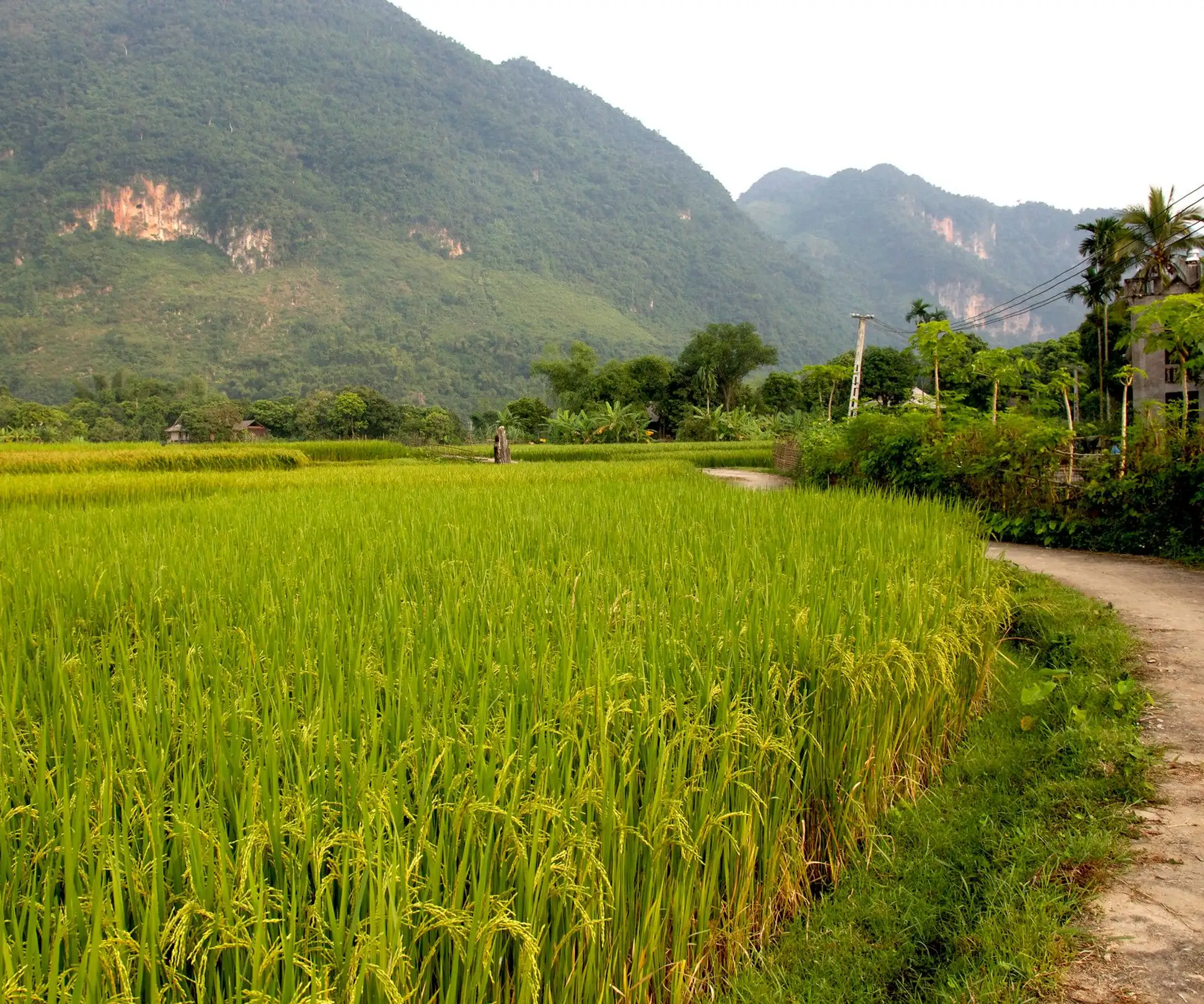
As you turn onto Highway 14E and connect to the Ho Chi Minh Highway, the world changes. The rice paddies disappear, replaced by the looming green wall of the Truong Son Mountain Range. The climb to Kham Duc is legendary. You are entering the jungle.
Highlight: Crossing the Lo Xo Pass. During the war, this was a heavily bombed area. Today, it offers panoramic views of pristine rainforest.
Evening: Kham Duc is a small town surrounded by mountains, known for gold panning history. The air here is noticeably fresher than the coast.
Distance: ~150km (Cycling approx. 80km) Terrain: Rolling hills with one major climb; generally descending towards the plateau.
This is often cited as the most beautiful day of Ho Chi Minh Trail cycling. The road winds along the border of Vietnam and Laos. To your right is the dense foliage of the Ngoc Linh nature reserve. You will pass Dak Glei and the former Dak Pek airstrip, remnants of the war that are slowly being reclaimed by nature. The riding here is exhilarating—smooth tarmac, little traffic, and the sound of exotic birds.
Cultural Stop: Arrival in Kon Tum. This is the first major city in the Highlands. Do not miss the Wooden Church of Kon Tum, a masterpiece of architecture blending French Catholic style with the stilt-house design of the Ba Na people.
Highlight: Walking across the Kon Klor suspension bridge at sunset.
Distance: ~50km (Cycling approx. 40-50km) Terrain: Gentle rolling hills, plateau riding.
A shorter day to allow for recovery and sightseeing. The road from Kon Tum to Pleiku is lined with rubber plantations. Cycling through these perfectly aligned trees, which form a canopy over the road, feels like riding through a cathedral.
The Destination: Pleiku is a city that suffered greatly during the war but has risen from the ashes.
Highlight: Bien Ho (Sea Lake). This is an extinct volcanic crater filled with emerald water. Local legend says the lake is so deep it connects to the ocean. It is a serene spot for a picnic lunch after the morning ride.
Cuisine: Try the "Pho Kho" (Dry Pho), a two-bowl noodle dish famous in this region (one bowl for broth, one for noodles).
Distance: ~160km (Cycling approx. 90km) Terrain: Flat to rolling.
Prepare to be caffeinated. You are entering Dak Lak province, the coffee capital of Vietnam. The roadside is dominated by coffee shrubs (Robusta). If you cycle here in spring, the hills are white with coffee blossoms; in autumn, they are red with ripe cherries. The riding is fast on this segment. The altitude drops slightly as you approach Buon Ma Thuot, the largest city in the Central Highlands.
Highlight: Stopping at a roadside drying yard to see how coffee is processed. The smell of roasting beans is everywhere.
Evening: Buon Ma Thuot is vibrant. Enjoy the bustling night market and perhaps visit the World Coffee Museum.
Distance: ~60km (Cycling approx. 60km) Terrain: Undulating backroads.
Escape the city and head south towards Lak Lake. This is one of the most scenic segments of the entire 7-day tour. You veer off the main highway onto smaller provincial roads. You will visit Dray Nur and Dray Sap waterfalls, thundering cascades fed by the Serepok River. A swim here is the ultimate refresher.
The Destination: Lak Lake is the largest natural freshwater lake in the Highlands. It is home to the M'nong ethnic people who live in longhouses on stilts.
Experience: Many tours arrange an overnight stay in a traditional Longhouse. It’s a communal experience, often accompanied by a Gong culture performance (UNESCO intangible heritage).
Distance: ~160km (Cycling approx. 80-100km) Terrain: Mountain pass climbing.
This is the "Queen Stage" of your 7-day Vietnam cycling tour. You leave the warm lowlands of Lak Lake and begin the ascent to Dalat, the "City of Eternal Spring," which sits at 1,500 meters. The climb up the Phu Son Pass is challenging but rewarding. As you gain elevation, the coffee bushes give way to tea plantations, and eventually, to pine forests. The temperature drops, and the air smells of pine needles.
The Arrival: Arriving in Dalat feels like arriving in a French village. The architecture, the flowers, and the cool weather are a shock to the system after the tropical heat.
Distance: Varied.
On the final day, you have two choices depending on your energy levels:
Dalat Loops: Spend the day cycling the roads around Dalat, visiting the Crazy House, the Old Railway Station, and Tuyen Lam Lake. The single-track trails around Dalat are also world-class for mountain bikers.
The Final Descent: Cycle the Khanh Le Pass down to the coastal city of Nha Trang. This is a 30km continuous downhill ride—pure adrenaline—taking you from the mountains to the beach in a few hours.
1. The Bike: A mountain bike (hardtail) or a robust hybrid bike is recommended. While the Ho Chi Minh Highway is paved, the shoulders can be gravelly, and the detours to waterfalls often involve dirt tracks. 32mm tires or wider are best.
2. Clothing: Pack for two climates.
Hot & Humid: For the lower elevations (Hoi An, Lak Lake). Lightweight, breathable jerseys.
Cool & Crisp: For the evenings in Kham Duc and Dalat. A light windbreaker and arm warmers are essential.
3. Nutrition: You will burn massive calories. Fortunately, Vietnamese food is perfect for cycling—high carb (rice/noodles), fresh vegetables, and lean protein. Hydration is key; carry at least two water bottles and replenish electrolytes, especially on the climbs.
While the route is navigable, a Ho Chi Minh Trail cycling 7 days trip is logistically complex.
Mechanical Support: If your chain snaps on the Lo Xo Pass, you are 50km from the nearest mechanic.
Luggage Transfer: Carrying 7 days of gear in panniers on steep climbs is exhausting. A support van is a game-changer.
Language Barrier: In the remote Highlands, English is rarely spoken. Ordering food or finding a guesthouse can be difficult.
To truly enjoy the ride without the headache of logistics, booking with a professional operator is highly recommended. Golden Cycling Tours is the premier choice for this specific route.
They specialize in Ho Chi Minh Trail cycling tours that are fully supported.
Premium Bikes: They provide high-quality Trek or Giant mountain bikes maintained to professional standards.
The "Magic Bus": Their air-conditioned support van follows you every mile. It carries your luggage, endless ice-cold water, fresh tropical fruits, and offers a sanctuary when your legs need a break.
Local Knowledge: Their guides don't just show you the way; they explain the history of the battlefields, introduce you to village elders, and ensure you eat the best local specialties, not just "tourist food."
Q1: How fit do I need to be for a 7-day tour? A: Moderate to good fitness is required. You should be comfortable riding 4-5 hours a day. However, with a support van (like those provided by Golden Cycling Tours), you can skip the hardest climbs and enjoy the downhills.
Q2: Is the road traffic dangerous? A: The interior Ho Chi Minh Highway (Highway 14 and 14C) is much quieter than the coastal Highway 1. However, trucks and buses do use these roads. Guides know the timing and the quieter backroads to minimize traffic exposure.
Q3: What is the accommodation like? A: It varies. In cities like Pleiku, Buon Ma Thuot, and Dalat, you can stay in 3-4 star hotels. In smaller towns like Kham Duc or Lak Lake, accommodations are cleaner but more basic guesthouses or traditional homestays.
Q4: Is it safe to eat street food? A: Yes! The food in the Highlands is fresh and delicious. Your guide will know which stalls are safe and sanitary. Com Ga (Chicken Rice) and Pho are staples.
Q5: What is the best time of year? A: The dry season in the Central Highlands runs from November to April. This is the best time to ride. The rainy season (May to October) can make the roads slippery and the views obscured by fog, though the waterfalls are more impressive.
"The Trip of a Lifetime" "We booked the 7-day ride from Hoi An to Dalat. I was worried about the climbs, but the scenery distraction worked wonders! The transition from the jungle to the pine forests was surreal. Golden Cycling Tours took care of everything—I just had to pedal and eat." — Michael T., USA
"More Than Just Cycling" "I expected a workout, but I didn't expect the history lesson. Visiting the war sites and the minority villages gave the ride so much meaning. The guide, Tuan, was a legend. The homestay at Lak Lake was a highlight." — Sarah & James, UK
"7 Days of Pure Freedom" "The roads were better than I expected. Smooth tarmac through the jungle. The support van was essential—filled with cold water and bananas exactly when we needed them. Finishing in Dalat with a cold beer was the perfect ending." — Lars, Sweden
The Ho Chi Minh Trail cycling 7 days journey is an odyssey that challenges your body and enriches your soul. It is a chance to disconnect from the digital world and reconnect with the physical one. You will feel the humidity of the jungle, smell the roasting coffee, hear the roar of waterfalls, and taste the freedom of the open road.
From the ancient heritage of Hoi An to the cool highlands of Dalat, this route encapsulates the very best of Vietnam. Don't just dream about the adventure—live it.
Ready to clip in? Visit Golden Cycling Tours to view detailed itineraries, check availability, and book your 7-day Ho Chi Minh Trail expedition today.




Leave a Reply
Your email address will not be published. Required fields are marked *